"Lost wallet, what should I do?" – this question is a real nightmare, especially on vacation. If pickpockets have stolen your wallet, losing the cash is actually the least of your worries. The unexpected often happens – and suddenly all your important cards and documents are gone.
In this emergency, quick action is required. First, you should contact the central emergency number 116 116 (from abroad, call +49 116 116) to block your bank and credit cards. Afterward, it's important to report the loss to the police. Whether your wallet was stolen or you lost your purse, the following five steps will help you limit the damage and find solutions if your wallet is lost abroad.
1. Keep calm and gain an overview
The moment you realize your wallet is missing can trigger panic—especially on vacation far from home. But right now, a clear head is more important than ever. The first and most important step when it comes to "what to do if your wallet is lost" is to stay calm and proceed systematically.
Why panic is counterproductive
A cool head is your best ally in this situation. Stress and panic cloud your judgment and lead to hasty decisions. In fact, hasty actions can even worsen the situation. The Hamburg police point out that some thieves simply take the cash and then throw away the wallet [1] . If you panic, you may miss the opportunity to search the immediate area.
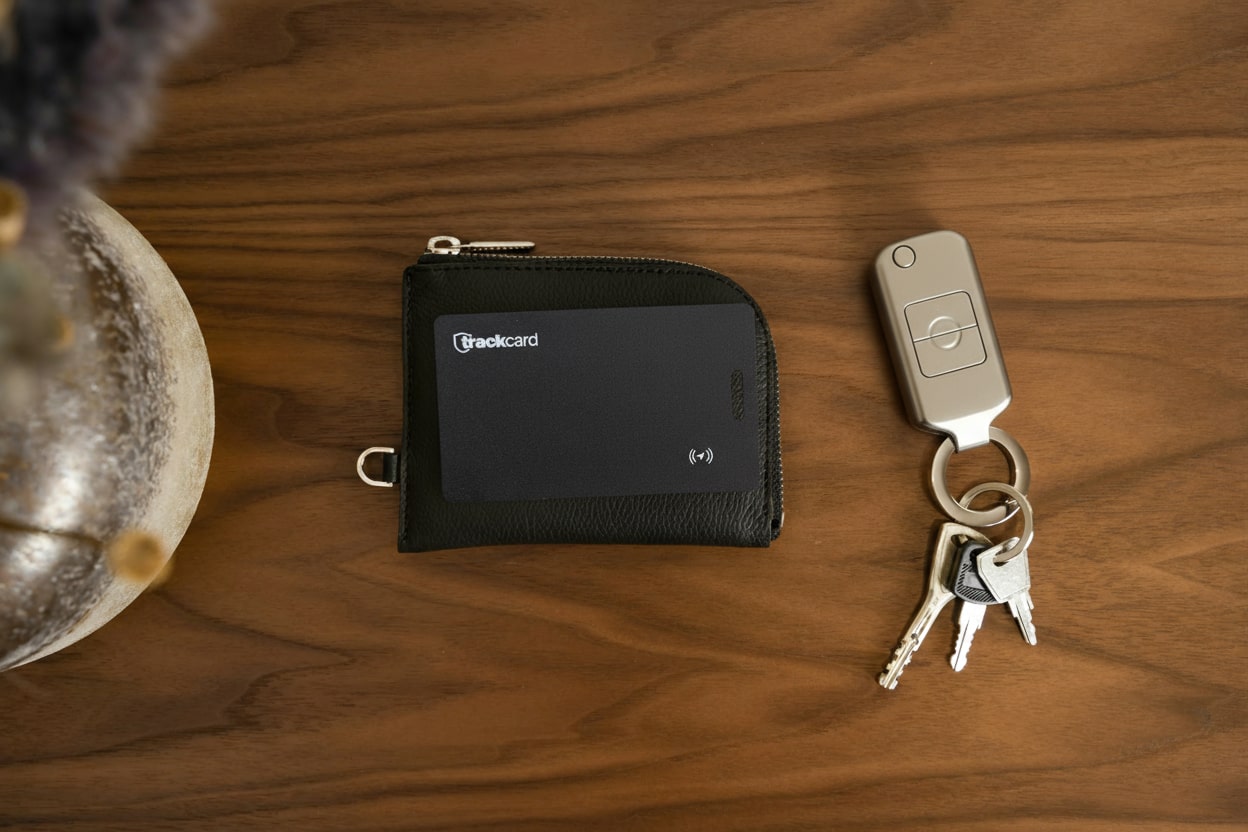
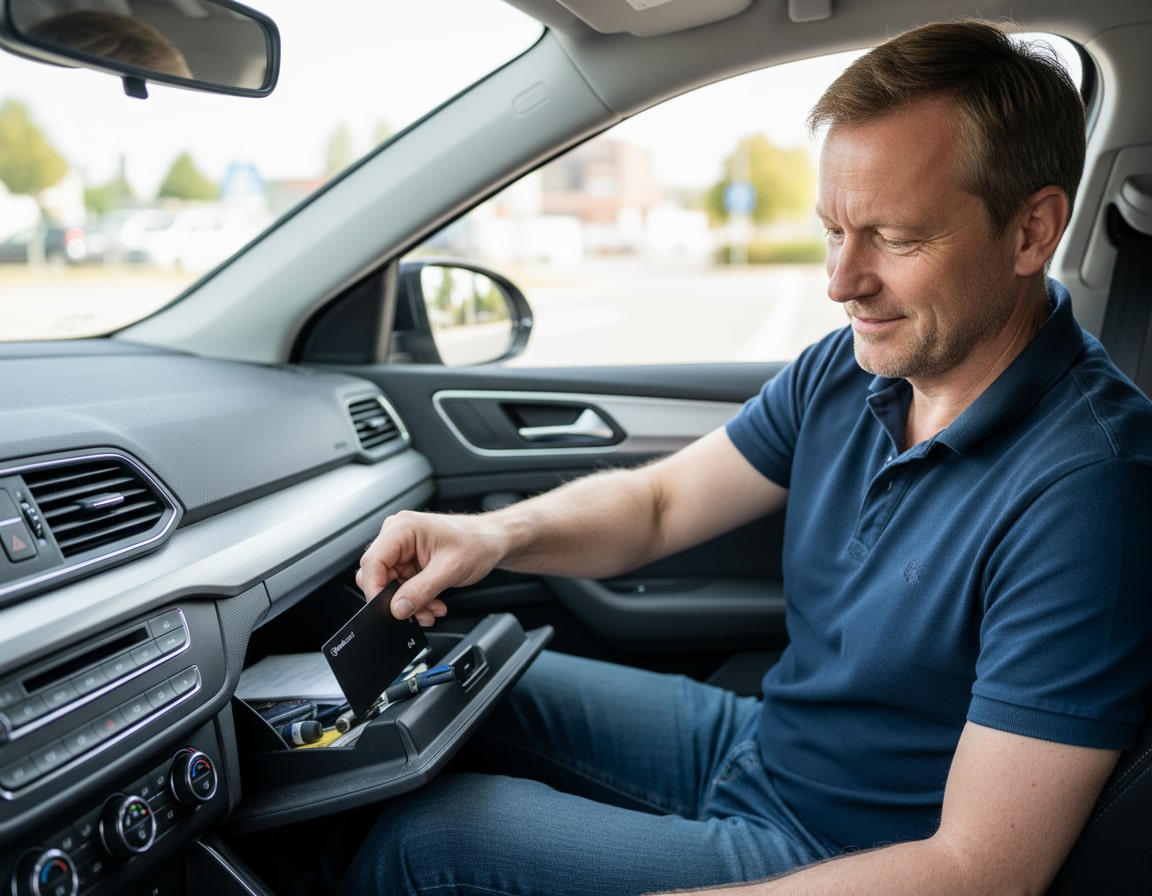
Before you press the red button and block all your cards in a chain reaction, take a deep breath. The most common place for a "lost" wallet isn't a thief's pocket, but your own hotel room, the glove compartment of your rental car, or the café you were in earlier. Smart technology was developed precisely for this moment. Do you have a wallet finder like the Trackcard with you? Then open the "Find My" app on your iPhone now. Often, the panic dissipates in seconds because you see that your wallet is on the table in a restaurant just 20 meters away. This one check can save you the entire rest of this emergency plan.
Remember: A stressed person doesn't plan effectively [1] . Take a moment to collect your thoughts. Mentally go through all the stages of your day—often your wallet is simply in another bag, a jacket, or in the car [1] .
What you should NOT do now
While the right approach is crucial, there are also mistakes you should definitely avoid:
-
Don't panic and act hastily. Hasty card blocking may be unnecessary if your wallet is found after all.
-
Never keep your PIN and bank cards together. If you do, your financial risk increases significantly. In cases of gross negligence , such as keeping your PIN and card together, you will be liable for even greater damages yourself [2] .
-
Don't give up without thoroughly searching your surroundings. Retrace your steps and search all the places you've recently been. Some wallets are left at cafés or restaurants.
-
Don't forget to call recently visited places. Many honest finders drop off wallets directly where they were found. Contact restaurants, transit companies, or taxi companies you used [3] .
-
Don't underestimate the importance of filing a police report. A report is not only important for insurance purposes, but also essential for later recovery of documents [2] .
Furthermore, focusing only on the loss of cash is counterproductive. Without quick action, thieves can make unauthorized payments with your cards. Although the bank is required to correct "unauthorized" transactions, you are still liable for up to €50 [2] . Therefore, a quick blocking of your card is essential – but only after you have verified that the wallet is actually gone.
Checklist: What was in your wallet?
A precise overview of what was in your wallet is crucial now. Make a list of all cards and documents so you know where to report [3] . This inventory will help you not only with the current situation but also in future emergencies.
Typical contents of a wallet are:
- Payment cards : debit/debit cards, credit cards
- Identification documents : identity card, driving license, possibly passport
- Insurance cards : Health insurance card
- Customer cards : IKEA Family Card, BahnCard, gym membership card [4]
- Cash : Write down the approximate amount
- Vehicle documents : If you keep them in your wallet
- Other important cards : memberships, access cards
For people who travel frequently, it is advisable to create such a list in advance and keep it safe—not in your wallet—or save it digitally. Another helpful precaution is to keep a business card with your phone number, email address, and address in your wallet to make it easier for honest finders to contact you [2] .
Once you've created this list, prioritize the cards according to their importance and potential damage if misused. Bank cards and ID documents are at the top of the list. However, before hastily blocking your wallet, you should first check whether it's actually lost or stolen.
Remember that even if you "only" lost your wallet, you can't automatically assume that all the items and documents you were carrying will reappear soon [1] . Therefore, a structured approach with a clear head is crucial.
In addition to the list of your wallet's contents, it's also helpful to have important phone numbers handy—ideally not in the wallet itself, but rather stored on your smartphone, for example, or on a separate piece of paper. These include the bank card cancellation number (116 116), contact details for your bank, embassy or consulate, and the nearest lost property office [2] .
A thorough overview will give you the clarity you need for your next steps and prevent important aspects from being overlooked. With this preparation, you'll be ready to systematically search for your wallet and initiate necessary security measures.
2. Check last location
Once you've overcome the initial panic and taken stock of the contents of your wallet, the active search begins. Now a systematic approach is required. When it's lost, every minute counts—especially when it comes to the possibility of finding it without too much effort.
Before you press the red button and block all your cards in a chain reaction, take a deep breath. The most common place for a "lost" wallet isn't a thief's pocket, but your own hotel room, the glove compartment of your rental car, or the café you were in earlier. Smart technology was developed precisely for this moment. Do you have a wallet finder like the Trackcard with you? Then open the "Find My" app on your iPhone now. Often, the panic dissipates in seconds because you see that your wallet is on the table in a restaurant just 20 meters away. This one check can save you the entire rest of this emergency plan.
Contact the lost property office, hotel reception or café
Honest finders often return lost wallets to the place where they were found. Therefore, you should first contact all the places you've recently been. This includes:
-
Hotel reception : Inform the reception staff about your loss. Found items are often handed in directly there.
-
Restaurants and cafes : Call the places where you last ate or drank. Wallets are often found under tables or on chairs.
-
Stores : Contact the stores where you recently shopped. Many have their own small lost and found departments for lost items.
-
Transportation : If you traveled by public transportation or taxi, contact the respective companies.
If you're on vacation, the local tourist office can often help you find the right contacts. If you lose your wallet abroad, it's also helpful to find someone who speaks the local language and can make phone calls for you.
The central Lost and Found office should also be on your contact list. Large cities often have central Lost and Found offices, while in rural areas, the municipal administration is responsible. Many cities now also offer online Lost and Found offices, where you can search for your lost item from the comfort of your own home. For example, in Hamburg, you can reach the central Lost and Found office online. Simply enter the item and the time of loss in the search field.
When visiting theme parks like Europa-Park in Germany, lost and found offices are often located at the main entrance and central information points. You can also contact them by email—in the case of Europa-Park, for example, at fundbuero@europapark.de . Lost and Found forms are often available for download.
Important: If you're looking for your phone, you'll often need the device's IMEI number, which you can find on your receipt. Without this number, many lost and found offices won't be able to release the phone.
Use trackcard or AirTag
Modern technology offers practical solutions for finding lost items. If you've been foresighted, you could have a tracker in your wallet that's now serving you well.
AirTags are small, discreet trackers from Apple that you can attach to almost any object. Once an AirTag is connected to your iPhone, you can track the location of your item using the Find My app. If you lose your keys or wallet, simply open the app and follow the map to the location.
Depending on the chipset installed in your iPhone, the accuracy of AirTag location varies. If you have an iPhone 10, SE, or earlier, you can display the approximate location of the AirTag. You can also use the built-in speaker to play a loud beep, making it even easier to find it.
Owners of newer iPhone generations (11 and 12) benefit from the built-in U1 chip, which can precisely determine the AirTag's position in the room. The device guides you to your AirTag with pinpoint accuracy using a directional indicator on your iPhone.
An alternative solution is the Trackcard – an ultra-slim, smart wallet tracking device. It connects to Apple's worldwide "Find My" network and helps you easily locate your wallet at any time. If your wallet is nearby, you can have it play a loud sound. If it's far away, the app shows you its last known location on a map – all completely anonymous and encrypted for your privacy.
The Apple "Find My" network consists of hundreds of millions of Apple devices worldwide. As soon as a device comes near your lost trackcard, its location is anonymously transmitted to you on the map—whether in Berlin, Barcelona, or Bali. The trackcard works directly with the "Find My" app, which is pre-installed on every iPhone, iPad, and Mac. No app required, no additional registration—simply unpack, connect, and feel safe.
How to use the AirTag for tracking:
- Open the Find My app and tap Objects.
- Tap the object connected to your AirTag, then tap "Find Nearby."
- Follow the on-screen instructions and move around the room until the iPhone connects to the AirTag.
- Follow the distance and direction information displayed on your iPhone. Your iPhone will also vibrate when you approach the AirTag.
- Tap "Play Sound" to hear a series of beeps to help you find your AirTag.
If you don't see "Find Nearby," make sure location access is enabled for Find My. To do this, go to the Settings app, tap "Privacy & Security," then "Location Services," and check that it's enabled. Scroll down, tap "Find My," and choose how Find My should access your location. Enable "Precise Location" for the best possible location experience.
Retracing your path: How to proceed
If you don't have an electronic tracker, the classic method remains: systematically retrace your steps. It sounds simple, but it requires a methodical approach:
-
Go back in your mind : Start with the last safe place where you definitely still had your wallet. Was it when paying at a restaurant? When you picked up your room key at the hotel reception?
-
Physically retrace your steps : If possible, retrace the exact distance you have traveled since the last safe point. Pay particular attention to:
- Seating areas where you took a break
- Fitting rooms in stores
- Toilets
- Public transport and taxis
-
Actively ask questions : Talk directly to people at the places you've visited. Waiters or salespeople often remember a wallet you left behind.
-
Include nearby locations : Thieves sometimes discard the wallet nearby after taking the money. Therefore, expand your search to include trash cans, bushes, or hidden corners near the suspected location.
-
Be systematic : Document where you have already searched and inquired, especially if you are abroad and there may be language barriers.
It's definitely a good idea to retrace your steps and walk backward. Be sure to ask in the stores you've been to if anyone has found a wallet. After a few days, you can also call the lost and found office. Alternatively, advertise with local social media groups or post flyers. Perhaps an honest finder will turn up.
Remember: The faster you act, the better your chances of finding your wallet. If you're traveling in Korea, it's a local practice to either drop off lost items at nearby stores or drop them in a mailbox—which means you may have to ask around at many different locations.
If your search is unsuccessful, you'll need to take the next steps: block your card, notify the authorities, and apply for replacement documents. But don't lose hope too soon—honest finders exist all over the world.
3. Block cards and documents immediately

Image Source: https://pixabay.com/
If your search for your wallet has been unsuccessful, immediately blocking all cards and documents should be your top priority. This quick action is crucial to limiting financial damage if your wallet falls into the wrong hands. A systematic approach will help you avoid missing anything.
Block bank cards via 116 116
The central emergency number 116 116 is your first point of contact if you've lost your wallet. This number is available 24 hours a day, 7 days a week. Calls are free from a German landline. If you are abroad, dial the area code for Germany and then the hotline: +49 116 116 [5] . Alternatively, you can also call +49 30 4050 4050 if 116 116 cannot be reached from abroad [5] .
To block your bank cards, have the following information ready:
- Your IBAN (alternatively account number and bank sort code)
- For credit cards, the card number and the card issuer
- Personal data for identification
Once you've initiated the blocking, be sure to note the date and time of the blocking [6] . This information may be important later if unauthorized charges occur.
By the way, many banks also allow you to block your cards directly via online banking or the banking app. At Sparkasse, for example, you can find this function in the service center under "Report lost card" or directly on the app's homepage [7] . This can sometimes be faster than a phone call.
After a phone call to block your card, some banks will automatically issue a replacement card. However, to be on the safe side, contact your bank to check whether a new card is already on its way [7] .
Block SIM card and mobile phone access
If your phone was stolen along with your wallet, you must immediately block the SIM card. This prevents unauthorized persons from making calls or using data at your expense [8] . You can request the blocking directly from your mobile provider or by calling the emergency number 116 116, provided your provider supports this service [9] .
To block your SIM card you usually need:
- Your phone number
- The SIM card number (if available)
- A customer password or other identification data [10]
Please note that there are usually fees between €5 and €15 for blocking your SIM card and issuing a replacement card. [10] Many mobile providers also allow blocking via your online customer account, where you can also request a new SIM card at the same time.
If you still have access to your online account, immediately change all passwords for important apps and services, especially email accounts and financial apps [11] .
Deactivate online ID function
Modern identity cards have an online ID function that must be deactivated if lost. This function allows for online identification as well as on-site data readout [12] . Although you are required to report the loss to a registry office or the police, this does not automatically mean that the online function will be immediately blocked.
To deactivate the online ID function, you have two options:
-
Blocking your account by phone at 116 116 : This is the fastest method. The hotline is available 24/7 [12] . However, you will need your blocking password, which was provided to you in the PIN letter [13] .
-
In-person blocking at the Citizens' Registration Office : If you no longer have your blocking password, you must appear in person at the Citizens' Registration Office. After verifying your identity, the blocking will be initiated [13] .
Deactivating the online ID function also blocks the age and residence verification functions [13] . This protects you from identity theft.
Block credit cards separately
In addition to the central credit card blocking number 116 116, credit card companies offer their own credit card blocking hotlines. You should use these if you've only lost your credit card or if you're abroad. Here are the most important numbers:
- Mastercard : Free from Germany 0800 819 1040, international +1 636 722 7111 [1]
- Visa : From Germany free of charge 0800 811 8440, international +1 410 581 9994 [1]
- American Express : +49 69 9797 1000 [1]
- Diners Club : +49 7531 3633 111 [14]
To block your credit card, have your card number ready [15] . If you are abroad and have had to block your credit card, Visa and Mastercard may offer emergency cash [16] . You will usually receive an emergency card or emergency cash within 48 hours [5] .
Important: In case of theft, you should always report it to the police. This is the only way to block your card from electronic direct debit (ELV), which protects you from further unauthorized debits [5] .
Secure email and online banking access
After blocking all cards, it's crucial to also secure your digital access. Online banking access, in particular, should be blocked immediately or assigned new passwords. You can have your online banking access blocked in addition to your cards by calling the emergency number 116 116 [7] .
If you notice any suspicious debits from your account, notify your bank as soon as possible [17] . Online banking is a lucrative target for criminals – they try to steal login credentials using fake websites and emails [17] .
Additional security measures after losing your wallet:
- Immediately change all passwords for email accounts, as these are often the key to other accounts [11]
- If you haven’t already done so, activate two-factor authentication for important accesses
- Check your bank statements regularly for unusual activity
- Log out of all devices you no longer own
Remember: The faster you act, the lower the likelihood of financial loss. Despite the stress, take the time to proceed methodically and secure all access points. At each step, make a note of when you blocked each card or access point—this information can be important later if any discrepancies arise.
After securing all cards and documents, the next step is to officially report the loss to the police and file a police report. This is especially important for later procurement of replacement documents and for potential insurance claims.
4. Inform the police and file a report
After you've blocked your cards and access, the next important step in your emergency plan is to notify the police. This step is often underestimated, but an official police report is essential for several reasons – whether your wallet is lost or stolen.
Why an ad is important
Reporting your wallet to the police is not just a formality, but a crucial step with concrete benefits. First, you will receive official confirmation of the loss, which is necessary for many subsequent steps. In the event of a theft, you should always report it to the local police [18] . Even if you are unsure whether your wallet was stolen or simply lost, reporting it is advisable [19] .
Filing a police report offers you several advantages:
-
Facilitating document replacement – It is much easier to apply for new identification documents if you have previously filed a loss or theft report [3] .
-
Securing insurance claims – In the case of theft, a police report is often a prerequisite for the settlement of an insurance claim [20] .
-
Clarify bank liability – banks are only liable for damages if the loss of the wallet was reported early [21] .
-
Prevent identity theft – By reporting it, you can further protect yourself against misuse of your cards and documents [3] .
In addition, in the case of suspected theft, the police will file a report against an unknown person. The subsequent certificate of loss is essential for reapplying for identification documents [3] .
What you should tell the police
To file a complete report, the police need detailed information. Be prepared to provide the following information:
- Personal data : Full name, address, date of birth and contact details
- Circumstances of loss : When and where you last saw the wallet
- Detailed summary : Use the list you created in the first step "Keep calm and get an overview"
- Details of important documents : ID number, driver's license number, card numbers
In the case of theft, a report is usually filed against an unknown person. Be sure to note the report's reference number—you'll need it later to request replacement documents [20] .
If you are abroad, you can file a report at any police station. In some countries, you also have the option of filing an online report. The Spanish police, for example, also offer this service in German on their website [22] . However, the online report must be confirmed and signed in person at any police station within 72 hours [22] .
Use loss report for later documents
The loss report is not just a formality, but an important document for various subsequent processes:
Applying for replacement documents : With the police certificate of loss, you can apply for a "travel document as a passport replacement for returning to the Federal Republic of Germany" at the German diplomatic mission abroad (embassy or consulate) [23] . You will also need a passport photo for this. Bringing a copy of your identity document with you will simplify the process considerably [23] .
Enabling departure : A certificate of loss from the local police is sufficient for departure by car or train within the EU [2] . However, when traveling by plane within the EU, you should play it safe, as many airlines require a valid replacement document even within the EU [2] .
Avoid fines : In some countries, the lack of valid identification documents can lead to fines. The certificate of loss serves as proof and helps avoid these [2] .
Remember that neither embassies nor consulates will reimburse you for the loss of your driver's license. You can only apply for a new one after your return to Germany [2] . However, it is important to submit a "Declaration of Loss of Driver's License" to the police [24] .
After returning from vacation, you should also file a police report with the German police. This is for your own protection in case someone assumes your identity [2] .
Even if you suspect you've simply lost your wallet, it's a good idea to report it. Since pickpockets are extremely skilled, many victims don't notice the theft and mistakenly believe it's a loss [25] . Alternatively, if you lose your wallet, you can call the police on 110 [26] .
Be sure to keep the ad safe – it is crucial for all further steps [25] .
5. Organize emergency cash and replacement documents
With your cards blocked and a police report filed, you now face two practical challenges: How do you get cash and how do you obtain replacement documents? These two points are crucial for continuing your vacation.
How to get cash (e.g. Western Union)
Without access to your bank cards, you're initially cut off from cash. However, there are several ways you can still get money:
Western Union is one of the most popular options for global money transfers. A friend or family member can send you money within minutes, which you can then pick up at one of approximately 500,000 Western Union locations worldwide. To pick up your money, you'll need:
- Your name
- Your address
- The expected amount
- Sender's name
- Sender's city and country
- A valid identification document
If you are abroad and no longer have an identity document, you can first go to the German embassy or consulate to obtain a temporary document.
Some banks also offer emergency cash assistance . Deutsche Bank, for example, provides up to €1,500 at 220,000 cash withdrawal points in 170 countries for lost debit and credit cards. Sparkasse also offers an emergency cash withdrawal service for its Standard, Gold, and Platinum credit cards, usually within 24 hours.
If you still have access to your smartphone, you may be able to pay via PayPal or Apple Pay/Google Pay . If you added your credit card to Apple Pay or Google Pay before your vacation, you can still make payments or withdraw cash even if you lose your physical card.
Provisional identification documents at the embassy
Abroad, the German embassy or consulate is your first point of contact for replacement documents. There, you can apply for a temporary passport. This is generally recognized worldwide as a travel document and is issued immediately.
The most important facts about the provisional passport:
- The validity period is a maximum of one year and is adapted to the purpose of the trip
- An extension is not possible
- The temporary passport does not contain an electronic chip
- For the USA it is not enough – there you also need a visa
To be issued, you must provide proof of urgency, for example, by presenting your flight booking. Please also note: A temporary ID card cannot be issued abroad.
What you need for replacement (photos, advertisement, copies)
To apply for replacement documents, you will need the following documents:
- Police report of loss or theft
- Biometric passport photo in 45 x 35 mm format
- Proof of identity (if available, e.g. expired passport or copy)
A valuable precautionary tip: Scan all important documents before your trip and email them to yourself. "Then show this scan to the embassy or consulate on your smartphone, for example, so all the important information is visible at a glance," recommends travel law expert Wojtal.
If you no longer have proof of identity, you still need to go to the embassy. There, your identity will be verified through other means. However, issuing a temporary passport can take several days, as your passport authority in Germany must grant authorization.
Keep in mind that you may face restrictions with the replacement document. Some countries require an entry stamp in your passport upon departure as proof of legal entry. In these cases, you may also need to apply for an exit visa.
Upon your return to Germany, you should immediately apply for new, regular documents. The temporary passport is only a temporary solution for the immediate situation and will not permanently replace your lost identification documents.
conclusion
Conclusion: Master the emergency with preparation and quick action
A lost wallet on vacation is undoubtedly stressful—but there's no reason to panic. The five steps outlined here will help you systematically handle this situation and limit the damage. First, stay calm and get a clear overview. Next, check your last whereabouts before canceling all cards and documents. Filing a police report is also essential, followed by organizing emergency cash and backup documents.
Particularly important: The faster you act, the less potential damage will be. By immediately blocking your cards by calling 116 116, you protect yourself from financial loss. Filing a police report, in turn, makes it much easier to obtain replacement documents.
Better preparation is also recommended for future trips. Before you leave, make a list of all important documents and cards in your wallet. Keep this list separately or email it to yourself. Keeping copies of important documents in your hotel room safe or digitally on your smartphone makes it much easier to find replacements. Smart technology like the trackcard, which connects to the "Find My?" network, can also help you quickly locate your wallet, thus bypassing the entire emergency process.
In fact, a lost wallet can never be completely ruled out—no matter how careful you are. However, with this emergency plan, you can minimize the damage and continue your vacation despite the loss. The German embassy or consulate is always available to assist you abroad, while services like Western Union can quickly provide emergency cash.
Ultimately, if you are prepared and act decisively, a lost wallet will be just an unpleasant episode rather than a ruined trip.
References
[1] - https://nomadenstory.de/informationen/kreditkarte-im-urlaub-verloren-oder-gestohlen-was-tun/
[2] - https://www.sparkasse.de/pk/ratgeber/reisen/diebstahl-im-ausland.html
[3] - https://www.sparkasse.de/pk/ratgeber/finanzplanung/finanzen-und-haushalt/portemonnaie-verloren.html
[4] - https://www.bonify.de/portemonnaie-gestohlen-schnell-handeln
[5] - https://www.ostsaechsische-sparkasse-dresden.de/de/home/service/kartenverlust.html
[6] - https://www.sperr-notruf.de/
[7] - https://www.sparkasse.de/pk/produkte/konten-und-karten/karten/kartenservices/karte-sperren.html
[8] - https://www.verbraucherzentrale.de/wissen/digitale-welt/mobilfunk-und-festnetz/handy-verloren-oder-gestohlen-sperren-lassen-anzeige-erstatten-13870
[9] - https://www.handyhase.de/magazin/sim-karte-verloren/
[10] - https://blog.deinhandy.de/sim-karte-sperren-lassen-so-funktionierts-schnell-und-einfach
[11] - https://www.sparkasse.de/pk/ratgeber/finanzplanung/finanzen-und-haushalt/handy-verloren.html
[12] - https://www.personalausweisportal.de/Webs/PA/DE/buergerinnen-und-buerger/der-personalausweis/ausweis-weg/ausweis-weg-node.html
[13] - https://www.die-online-ausweisfunktion.de/online-ausweisfunktion/online-ausweisfunktion-sperren/
[14] - https://www.auslandsaufenthalt.org/kreditkarten-verlust-im-ausland/
[15] - https://keysecurity-ltd.com/ch_de/ratgeber/kartenschutz/portemonnaie-verloren
[16] - https://www.urlaubstracker.de/kreditkarte/kreditkarte-verloren/
[17] - https://www.bsi.bund.de/SharedDocs/Downloads/DE/BSI/Publikationen/Broschueren/Wegweiser_Checklisten_Flyer/Checkliste_BSI_ProPK_Onlinebanking.pdf?__blob=publicationFile&v=3
[18] - https://www.verbraucherzentrale.de/wissen/reise-mobilitaet/hotels-und-ferienhaeuser/wenn-wertsachen-im-urlaub-abhanden-kommen-12894
[19] - https://www.vr.de/privatkunden/news/portemonnaie-verloren-was-nun.html
[20] - https://www.ing.de/wissen/portemonnaie-verloren-checkliste/
[21] - https://www.sparda-bw.de/magazin/geldbeutel-weg-checkliste
[22] - https://spanien.diplo.de/es-de/service/2543238-2543238
[23] - https://www.adac.de/reise-freizeit/ratgeber/reisetipps/pass-verloren/
[24] - https://www.geo.de/reisen/reisewissen/wertsachen-im-urlaub-verloren--das-ist-zu-tun-33744006.html
[25] - https://www.polizei.bremerhaven.de/faq-verloren-gegangen.html
[26] - https://www.merkur.de/verbraucher/geldbeutel-verlust-diebstahl-konto-sperre-ausweis-fuehrerschein-krankenkasse-tipps-92062522.html